PARENTAL CARE VARIES WORLDWIDE
Which animal makes a better parent, a bird that never feeds her young or a turtle that lays her eggs and never looks back? How about a mammalian mother who only visits her nursing babies every few days? The answer is no parent is better than another. Any species still around has been on the right track regarding parental care.
In seeking to unravel mysteries of the natural world, ecologists try to identify patterns. Understanding parental care, or the seeming lack of it, can be perplexing. The range of variability among species in the level of attention parents give their offspring is remarkable. Some show constant concern for the welfare of their young. Others appear oblivious. We can assert that some animals have unusual parenting styles. We can’t indict any for being bad parents.
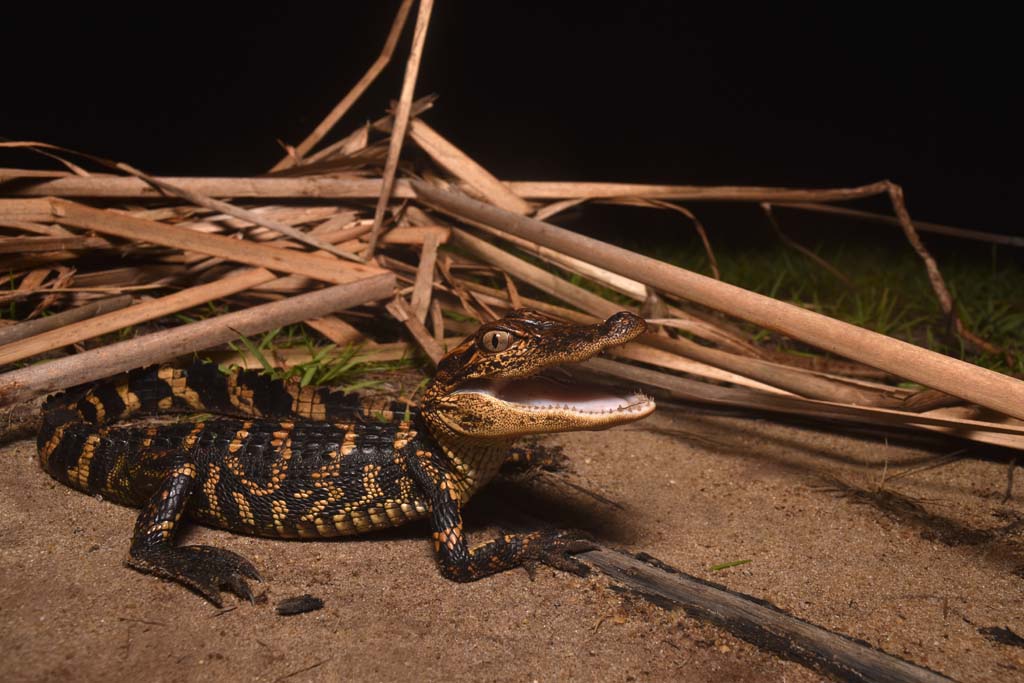
Humans, elephants and alligators are at one extreme. Mothers are attentive before and after the birth of their offspring. They will sacrifice their own lives to protect their young. Mother alligators guard their nests, crack open eggs to free the hatchlings and even carry babies to the water in their mouths. Like many mammals (and unlike most fellow reptiles), they will actively protect their young from enemies, long after they are newborns. I contrast, the eggs and young of turtles are entirely self-sufficient.
All mammal babies depend on their mothers to provide milk for nourishment, but the range and level of parental attentiveness varies. Tree shrews of Southeast Asia give minimal attention to their young. The mother tree shrew lives with her mate in one tree, has her babies in a nest some distance away and visits the nest only every other day or so to nurse the young. These fascinating creatures are notable in having been reported to have higher brain to body weight ratios than any other mammal, including humans.
Alligators are attentive parents, but most reptiles have a parenting strategy at the other end of the spectrum. A female sea turtle can lay more than a thousand eggs during a summer and be a thousand miles away when they hatch. However, all turtles successfully accomplish one of the obvious requirements of a mother—making sure her offspring are well fed as babies. Reptile mothers provide parental care in advance with large yolk supplies on which the young can subsist for months. They don’t do things the way mammals do, but they know what they’re up to. Reptiles, after all, have been around a few million more years than any mammals.
Most female birds carry out parental duties by at least incubating the eggs. The golden pheasant female sits on the nest without eating or drinking until the eggs hatch. The megapodes, a group of birds related to pheasants, cover their eggs with mounds of soil. The male mallee fowl, a chickenlike megapode of Australia, constructs the nest by digging a sizable hole in soft soil, filling it and making a large mound of twigs and other debris. The female comes to the mound only to lay eggs and seems disinterested in what becomes of the eggs or the young. The female typically lays one egg a day on the mound. Her mate buries it. The male mallee fowl stays with the nest for weeks, adjusting the incubation temperature. The European cuckoo and the American cowbird provide no parental care themselves. Both deposit eggs in the nests of other birds. The unknowing foster parents raise the young of these nest parasites along with their own young.
Shifting environmental patterns have shaped and molded animal behavior throughout evolutionary time, resulting in a diverse array of fascinating parental practices. Consistency does not always prevail, even within closely related groups. Understanding the behavior patterns of different animal species reveals how complex natural systems really are. Knowing this, we can better understand our own place and uniqueness in the world, even better than tree shrews with their proportionately larger brains.
Send environmental questions to ecoviews@gmail.com.