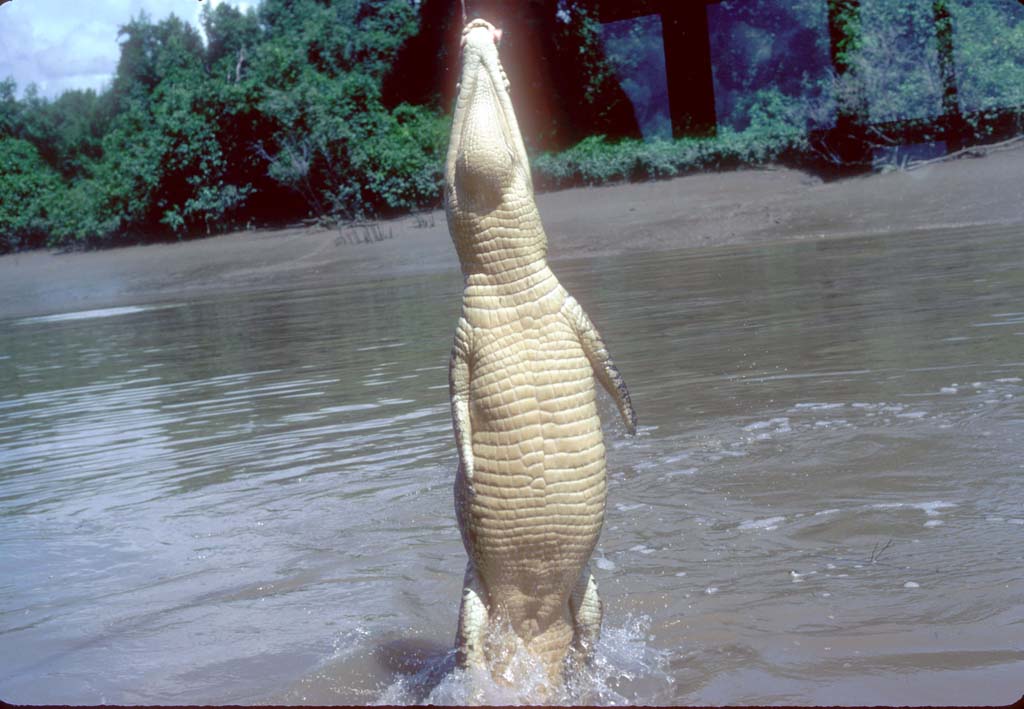
HOW HIGH CAN AN ALLIGATOR JUMP?
Some animals keep the human spirit alive by spurring our curiosity. The American alligator is a superstar in this role, as shown by these questions I have received.
Q. We have moved to a community in Gainesville, Florida, with a lake where alligators live. We saw one over 6 feet long come onto shore only a few feet from the 8-foot-high chain link fence separating our neighborhood from the lake. Could an alligator jump high enough on land or in the water to get over the fence?
A. Alligators cannot jump over fences, but I have seen the enormous saltwater crocodiles of Australia lunge upward several feet above the water line of a river to grab meat dangled from a line. I have also seen alligators reach the other side of a fence without jumping. In a research study where we had encircled a lake with a fence made of aluminum flashing, we found it destroyed one day after a 9-foot alligator decided to leave the wetland that was drying up. A small fence is a trivial matter to a bulldozer. Second, I have seen an alligator climb a chain link fence. One thing both alligators had in common is that they were enclosed in an area they wanted to leave. In your case, I see no reason why an alligator would want to leave the lake.
Q. Someone told me he heard of a turtle in Florida that laid its eggs in an alligator’s nest. Is there any truth to such a tale?
A. Yes. Alligators build large aboveground mounds made of soil and vegetation in which they bury their eggs. Mother alligators that stay nearby for weeks while the eggs incubate are a deterrent to predators like raccoons or bobcats that might dig up the eggs. The turtle eggs benefit from the protection of the female alligator guarding her own nest.
Q. We now live in southern Georgia and have read about alligator attacks in the southern states nearly every year. I don’t know if anyone has been eaten, but people have definitely been bitten and even killed. What provokes an alligator, and what should you do if you are attacked?
A. The circumstances leading up to an alligator attack vary, as does the outcome for the victim. One avoidable alligator tragedy is a result of someone walking their dog too close to the shoreline of a lake and then becoming collateral damage when they try to save their dog or get tangled in the leash. Leaving the water to make a meal out of a dog appears to be instinctive behavior for the big predators.
Another situation leading to alligator attacks is a mother gator guarding her eggs that are on land or her babies that are in the water. I have not experienced what happens when someone is in the water near a protective female alligator. I assume a swimmer would have some immediate problems to deal with.
Finally, reliable reports exist of rare but unexplained attacks. Some have been attributed to alligators that are unafraid of people because of being fed (an illegal act). In one documented account in South Carolina’s Cooper River a large alligator attacked a scuba diver. Whether the alligator perceived the person as prey or competition is unknown.
If you encounter an alligator on land, back away, then turn around and run if it keeps coming. Do the same if an open-mouthed alligator (presumably a mother) comes out of the water toward you. If you are in the water, try to get to shore. As a last resort, fight back by hitting the animal in the face and poking its eyes, even though the effort may seem futile. Yelling and screaming is also a good idea because someone might hear you and come to your aid. Most people don’t need to be told to do that.
Send environmental questions to whitgibbons.com/questions.