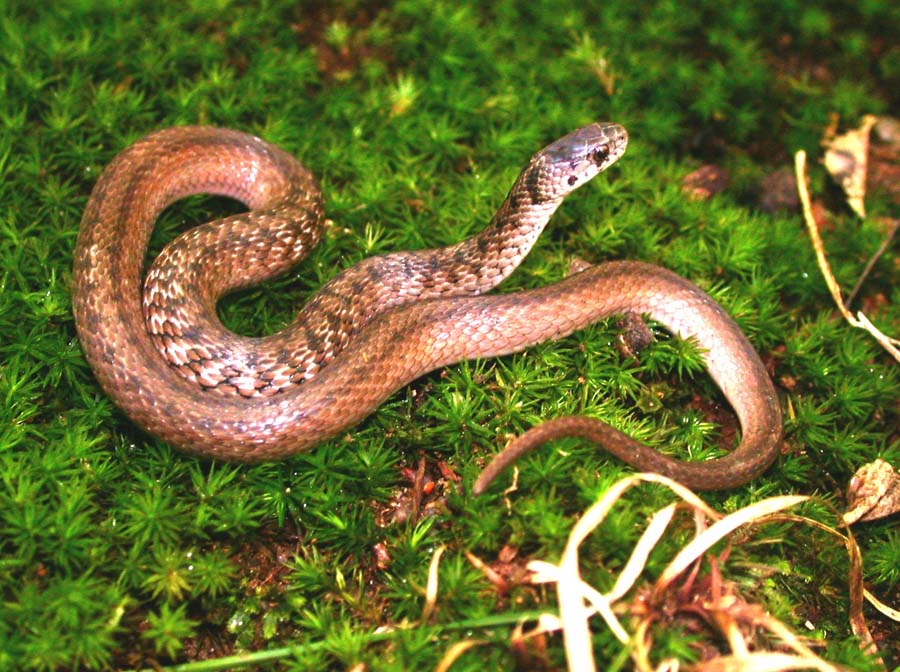
AUTUMN IS WHEN WE HAVE THE MOST SNAKES
Snakes are a hallmark of healthy habitats. And throughout the country, most habitats have more snakes present in early fall than at any other time of the year, even spring. The explanation is a simple one—most North American snakes are born from midsummer into early autumn. All snake populations reach their highest numbers across the country in August and September because that is when hatchlings enter the scene. With a few notable exceptions, most snakes mate in the spring, so adults are usually more conspicuous then.
Racers, rat snakes and kingsnakes lay eggs in early summer, incubating underground or beneath leaf litter for two or three months before hatching. Garter snakes, watersnakes and rattlesnakes, as well as other U.S. pit vipers, hold their babies inside the body and give live birth during the same season. So, if you see a snake, over the next couple of months, it is likely to be a small one, possibly moving around in search of its first meal while the weather is still warm. One snake that doesn’t follow all the rules of reproduction is the canebrake rattlesnake in the Southeast. Although babies are born in the fall or late summer like other snakes, that is also mating season, and big males can be seen crossing highways in search of mates. Females may delay having their young for up to two years after mating.
Due to natural mortality rates that affect any animal species, the actual population size of all snake species begins to decrease by midautumn. By spring, many have been consumed by predators or died in other ways. Roads are a death trap for lots of snakes. Having a body 30 to 40 times longer than your width makes it difficult for a snake to scoot safely across a busy highway. And, unfortunately, a few people feel obliged to kill every snake they can. Many folks are taught to abhor snakes, but children have no innate fear. Teaching children to appreciate snakes as an integral part of the environment is a far better educational path.
Photos of all native species can be found online or in any regional field guide. Geographic variations can make some snakes especially difficult to identify, so check all available photos of a species. Some species are highly variable in color and pattern. In addition, the young of some snakes look quite different from the adults. The three most common snake ID questions I get involve the babies of rat snakes, coachwhips and black racers because, in most regions, body color and pattern for babies are completely different from adults.
At every time of year I get asked “what do I do if I get bitten?” The answer in the Southeast: If it is not a rattlesnake, copperhead, cottonmouth or coral snake, you probably don’t need to do anything except wash the scratch off with soap and water. If the snake is venomous, conventional wisdom suggests that you avoid old-fashioned first aid techniques (cutting, tourniquet or ice) and instead get someone to drive you to a hospital. Odds are the bite will not be serious, but don’t take a chance, just in case.
Finding out you have a snake in your yard can be disconcerting to some people. But in the case of maligned animals like snakes, familiarity may breed understanding rather than contempt. You are likely to find that the interesting creature living near you is nothing to worry about. Even in areas of the Southeast where snakes abound, only about 1 species in 6 is venomous. Most of the others couldn’t hurt you if they tried. If you see a snake, observe it from a safe distance and look forward to telling friends how you watched it crawl away.
Send environmental questions to ecoviews@gmail.com.